
We all should read the following letter by Dr. Urbaniak. The NSEF has been presenting an other constitutional issue for the past 30 years without the government responding….Equalization.
Over the years efforts to have all levels of government (Federal, Provincial and Municipal) to be fiscally accountable and transparent about billions of dollars regarding the equalization transfer has resulted in the same government lack of accountability and transparency.
Here is Dr. Urbaniak’s letter:
TOM URBANIAK: Is Nova Scotia’s cabinet acting unconstitutionally?
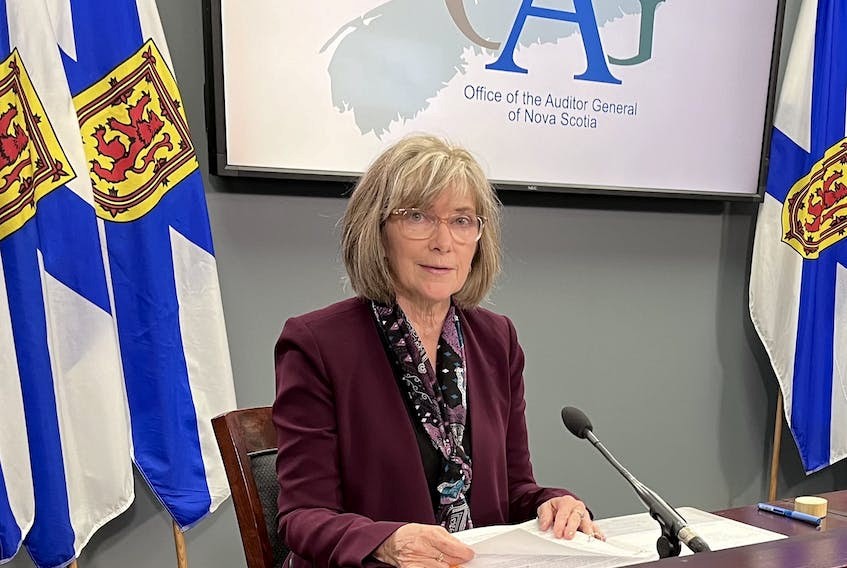
The auditor general of Nova Scotia, Kim Adair, is an independent, non-partisan officer. She has again raised a serious concern: the provincial cabinet has been approving major public spending on its own and in closed session. Cabinet is not coming back to the legislature for authorization. It’s not even happening retroactively.
I will go a step further: I believe this practice is unconstitutional.
To make things worse, observes the auditor general, successive governments in Nova Scotia have not been allowing the elected legislature to meet very much. (The House of Assembly sat on just 33 days in 2023.)
More urgent
The problem of extra spending without the House of Assembly’s scrutiny and authorization is not new. But it has become urgent because we are now dealing with very significant sums of public money.
In the 2022-2023 fiscal year, the cabinet allowed itself a record $1.66 billion in unbudgeted expenditures – above the approved budget of $13.3 billion – without coming back to the House.
The province’s Finance Act enables this unaccountable practice, unique in Canada. Adair, however, has recommended that the Finance Act be changed “to align the additional appropriations process with legislated practices elsewhere in Canada and provide accountability and transparency over the spending of all public funds.”
Finance Minister Allan MacMaster has so far refused. That’s unfortunate. Premier Tim Houston’s government had promised to be different than that of former premier Stephen McNeil.
The constitution
The relevant, core constitutional text here is the Constitution Act, 1867 (formerly known as the British North America Act). That Act set up the Canadian federation. To this day, all laws and government actions – including Nova Scotia’s Finance Act -- must adhere to it. The 1867 foundational statute supersedes other laws.
Section 90 of the Constitution Act, 1867, states that provincial executives (cabinets) and legislatures must follow the same constitutional rules for spending, taxes and authorizations that are laid out for the federal Parliament. And the 1867 Act requires the appropriation of federal public funds to be proposed to the House of Commons, not just to the federal cabinet, and to be authorized by Parliament.
The Constitution Act, 1867, also explicitly confers on Canada “a Constitution similar in Principle to that of the United Kingdom.” A key British constitutional principle was – and still is – that Cabinet proposes the appropriation of public funds, but Parliament must authorize the appropriation.
At the federal level (and in other provinces), there is no ambiguity or uncertainty about the constitutional requirement to make sure that Parliament (or a provincial legislature) ultimately gets to authorize spending in a given year.
The manual known as House of Commons Procedure and Practice is a kind of bible for the parliamentary process. It also addresses the way the cabinet interacts with the rest of Parliament. The manual is currently referred to colloquially as “Bosc and Gagnon,” after its most recent co-editors, Marc Bosc and André Gagnon.
Bosc and Gagnon write as follows: “The Crown, on the advice of its Ministers, makes the financial requirements of the government known to the House of Commons which, in return, authorizes the necessary ‘aids‘ (taxes) and ‘supplies‘ (grants of money). No tax may be imposed, or money spent, without the consent of Parliament.”
"Supplementary estimates"
In the course of a year, the government may indeed need to spend more in certain areas than Parliament (or a provincial legislature) had originally authorized. At the federal level – and in other provinces – there is a constitutionally valid way to deal with this.
The House sits to consider “supplementary estimates” proposed by the minister of finance.
In an urgent situation, such as during an election period when Parliament is dissolved, there is a process for cabinet to issue a “special warrant.” But even then, the special warrant is deemed to be part of the next cycle of financial appropriations proposed to the House.
So, there’s still a kind of retroactive parliamentary approval.
Auditor General Adair laid out her office’s concerns about Nova Scotia’s practices in considerable detail. The official response of Minister MacMaster consisted of just two sentences: “The Minister of Finance appreciates the work of the Auditor General on this matter. The Minister is satisfied that the current parameters of the Finance Act ensure accountability and transparency over the spending of all public funds.”
That’s simply not good enough in a parliamentary democracy.
We have a constitutional issue here.
Dr. Tom Urbaniak, professor of political science and director of the Tompkins Institute at Cape Breton University, is the author of six books, including, most recently, In the Public Square: A Citizen’s Reader.
Tom Urbaniak Writes an Excellent Letter About the Gov. of NS

Posted by
Nova Scotians for Equalization Fairness
Receive news by email and share your news and events for free on goCapeBreton.com
SHOW ME HOW
https://capebreton.lokol.me/tom-urbaniak-writes-an-excellent-letter-about-the-gov-of-ns
Government Government News
Government Government News Federal Government
Government Government News Municipal Government
Government Government News Provincial Government
Government Political Commentary
Location Canada
Location CBRM
Location World
View all the LATEST
and HOTTEST posts
and HOTTEST posts



0
This post does not allow comments.- 1
arrow-eseek-eNo items to display